

The 1960s warned of oil depletion within a decade. The 1970s broadcasted the arrival of a new ice age. The 1980s predicted acid rain would end global agriculture, while the 1990s obsessed over the vanishing ozone layer. By the 2000s, the narrative focused on the melting Arctic, followed by the 2010s’ claim that we had a mere ten-year window to prevent a planetary apocalypse. As H.L. Mencken once observed, “The whole aim of practical politics is to keep the populace alarmed (and hence clamorous to be led to safety) by menacing it with an endless series of hobgoblins, all of them imaginary.” These headlines tether the human spirit to a cycle of perpetual, short-term alarm, but when we elevate our gaze to the eons, we see past these transient anxieties and recognize the majestic scale of God’s sovereign design.
The Scale of the Infinite and the Limits of Discovery
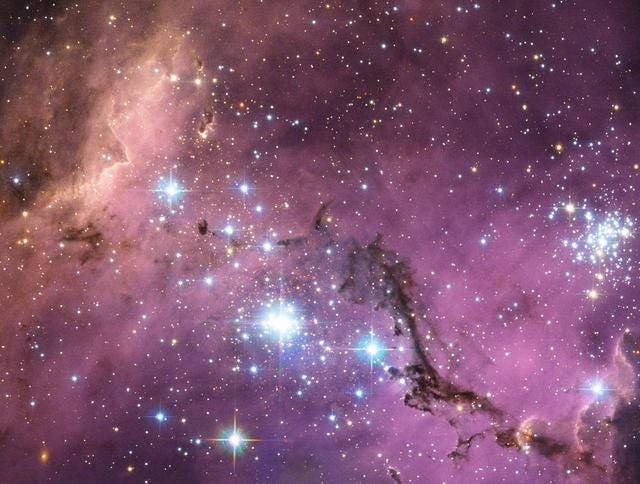
The universe is a vast demonstration of a Creator whose wisdom is unsearchable. If the Sun’s expanse were scaled to the breadth of a great cathedral’s dome, our world would be reduced to a single, microscopic grain of sand resting upon the floor. Our sun is merely one of 200 billion stars in this galaxy, among trillions of galaxies. As Nicolaus Copernicus noted, “To know the mighty works of God, to comprehend His wisdom and majesty and power... must be a pleasing and acceptable mode of worship to the Most High.”
As human knowledge reaches its boundary, our understanding of physics fractures. The macro level shows gravity warping the fabric of time; the micro level reveals a quantum realm that defies human logic. Werner Heisenberg famously stated, “The first gulp from the glass of natural sciences will turn you into an atheist, but at the bottom of the glass God is waiting for you.” We are not the authors of natural law, but rather humble scribes attempting to document the intricate, divine architecture God established at the beginning of time. He operates within a vastness of divine governance and higher order that far exceeds our current equations. As Freeman Dyson remarked, “The more I examine the universe and the details of its architecture, the more evidence I find that the universe in some sense must have known we were coming.” This realization led Francis Crick to admit, “An honest man, armed with all the knowledge available to us now, could only state that in some sense, the origin of life appears at the moment to be almost a miracle.”
The Trinity: The Very Definition of Love
We love God because He is our Creator, the Architect of every cell and star. Our love is anchored in the reality of His devotion: He was willing to die for us. This Mighty Being—magnificent, omniscient, and omnipotent—chose to humble Himself. The Sovereign of all things set aside His glory to stand in our place. C.S. Lewis captured this beautifully: “The Son of God became a man to enable men to become sons of God.” The Bible reveals God as three Persons in one Being—the Father, the Son, and the Holy Spirit. This is not just a theological curiosity; it is the very foundation of why love has meaning. God is the definition of love because love inherently requires another person to love. You cannot have love without an object for that affection; it cannot exist in a vacuum. Within the Trinity, there has been an eternal, person-to-person relationship of love between the Father, Son, and Spirit that existed before the first star was sparked. As Thomas Aquinas explained, “Love is the essence of God. Since God is an eternal relationship of three persons, Love is not what He does, but who He is.” Without this plurality of persons, “love” would be a meaningless concept, but because He is three Persons in one Being, He is the source of all relationship. Or as Irenaeus put it, “He was made what we are, that He might make us what He is Himself.” Saint Bernard of Clairvaux echoed this sentiment, stating, “God is one, but He is not alone.”
The Physics of Privation and the Reality of Chaos
In physics, we define phenomena by the absence of another. Cold is not a substance; it is the absence of thermal energy—the lack of molecular vibration. Darkness has no independent existence; it is merely the absence of light. In this same vein, evil is the absence of the Good. Gregory of Nyssa argued that “Evil is not a living entity, but a condition of the soul which is not under the influence of the Good.” Evil is the spiritual shadow cast when a heart turns from the Creator.
In a fallen world, chaos is the natural order of things. This is Entropy—the universal tendency for systems to move from order to disorder. A garden left untended returns to weeds; a human heart separated from God’s Spirit drifts toward self-interest. As Friedrich Hayek observed, “Order is not a pressure which is imposed on society from without, but an equilibrium which is set up from within.” Chaos is the result of maintenance stopping. We require a Single Source of Truth and a God of Order to sustain us.
https://www.flickr.com/photos/nasahubble/55054140205/
The Living Earth: Subduction, Abduction, and Renewal
The ground beneath our feet is a marvel of divine engineering. We reside on a thin lithospheric crust, shifting and splitting as it floats atop a swirling, incandescent mantle. Through subduction and abduction, the Earth’s crust stays in a state of perpetual movement—continually drawn into the purifying heat of the mantle to be melted and recycled or pushed upward to form new land.
The fear that human action will permanently spoil the planet ignores this geological “cleansing” system. While we live in the short term and certainly feel the consequences of our mismanagement, the philosophy that pollution is a permanent status quo is a fallacy. Wealth and technology provide the tools to rectify our environment. London, once choked by lethal smog, was cleaned through the fruits of wealth and innovation. As Roger Scruton warned, “The environmentalist’s dream is an egalitarian utopia... but the result is always a landscape of poverty.” Progress, not poverty, is the path to a cleaner world.
Biblical Stewardship: Wealth as a Divine Catalyst
God fundamentally approves of wealth and fortune; He is the source of them. We see this in the lives of our fathers in the faith. Abraham was “very wealthy in livestock and in silver and gold.” Isaac reaped a hundredfold because the Lord blessed him. Joseph managed vast capital to save nations. Solomon was granted riches surpassing all kings. John Wesley’s famous maxim, “Earn all you can, save all you can, give all you can,” reflects this reality. As John Adams noted, “The recognition of the right of property is the first step toward civilization.”
These examples show that God grants wealth to those who act as stewards. This is the divine catalyst for capitalism—the accumulation of resources to better the lives of everyone else. To excavate a deep trench or to clear a large field, one could use a spoon—inexpensive, but utterly ineffective. Progress requires the accumulation of capital to invest in a backhoe or an excavator, machines costing $250,000 or more. Consider the microprocessor fabrication plant (Fab). To build the manufacturing heart of our digital world, it costs billions of dollars and requires the most brilliant minds to push the boundaries of physics. No person impoverished by choice has ever built a Fab; as Ayn Rand noted, “Wealth is the product of man’s capacity to think.”
The Stupidity of Modern Alarmism
Today, the public stage is crowded by voices prioritizing emotional manipulation over reality. We see this in Greta Thunberg, whose “How dare you!” rhetoric treats complex global systems as simple moral failures. This stupidity ignores the technological advancement needed to actually protect the environment. Michael Crichton once remarked, “Environmentalism is the new secular religion for those who have lost their faith in God.”
Thunberg and her counterparts—from John Kerry with his private-jet hypocrisy to Alexandria Ocasio-Cortez and the economically illiterate Green New Deal—advocate for the dismantling of the very engines of progress that allow for a cleaner world. As Milton Friedman argued, “A society that puts equality before freedom will get neither.” They seek to return us to primitive poverty under the guise of “saving” a planet already designed for renewal.
The Bureaucratic Labyrinth: Complexity as a Cloak for Stupidity
The modern state operates through a labyrinth of stupidity.
The “Mansion Tax” (ULA) Mirage: Los Angeles’ ULA tax, marketed as a tax on “mansions,” applies a 4% to 5.5% tax on sales over $5 million. Since this includes apartment buildings, developers face a massive penalty for building housing, causing supply to crater and rents to skyrocket.
The Erosion of Property Rights: Proposition 19 negated Proposition 13’s protections. When property is transferred, the tax basis is elevated to market prices, forcing landlords to hike rents to cover tax increases, leading to the eviction of the poor.
The Regulatory Cost: Acts like Sarbanes-Oxley (SOX) primarily enriched consultants from firms like Deloitte, PwC, and Ernst & Young. These firms became essential middle-men, charging fees to assuage the legal “guilt” and liability of CEOs. Compliance costs range from $1 million to $10 million per year for mid-sized companies. These billions are passed directly to the consumer through inflated prices. As Reagan quipped, “If it moves, tax it. If it keeps moving, regulate it. And if it stops moving, subsidize it.”
The “Empty Suit” and the Solution of Proximalism
We are led by “empty suits”—individuals like Barack Obama, Justin Trudeau, or Kamala Harris—who have never managed a private company or balanced a balance sheet. Thomas Sowell noted, “Freedom is not a gift from government. Freedom is a gift from God, which the government must protect.” Yet, voters choose based on hair or smooth rhetoric. Harris remained a candidate despite a clear lack of competence because the machine prioritizes optics over stewardship.
Proximalism is the essential remedy. By shifting governance to a local level (communities of 150 people), the “empty suit” becomes an impossibility. You are known by your character. In a proximal community, the best minds naturally rise to the top because they are accountable to those they live beside. When autonomous communities choose their representatives, those leaders collaborate through the Wisdom of the Crowds, much like a president’s cabinet should be a collection of vetted experts. As Lord Acton famously warned, “Power tends to corrupt, and absolute power corrupts absolutely.”
The Biblical Ledger: The Single Source of Truth
To navigate this complexity, we require a Single Source of Truth (SSOT). The Bible functions with the integrity of a distributed ledger, much like blockchain technology. With over 25,000 New Testament manuscripts—compared to just a handful for other ancient texts—the veracity of every word is supported by an abundance of “ledger copies.” If a single person attempted to “hack” the text, the thousands of other nodes across the world would have revealed the deviation. As C.S. Lewis wrote, “I believe in Christianity as I believe that the sun has risen: not only because I see it, but because by it I see everything else.”
Anendophasia and the Proximal Covenant - Filtering the Noise of Centralized Lunacy
The startling divergence in human cognitive processing—specifically the existence of anendophasia, or the absence of an internal monologue—reveals a fundamental flaw in our current model of mass-market democracy. While many operate under the assumption that a silent, linguistic narrative tracks their every decision, psychological research led by Dr. Russell Hurlburt suggests that a significant portion of the population experiences no such internal voice. In his study The Phenomena of Inner Experience, Hurlburt utilized Descriptive Experience Sampling to find that participants experienced inner speech in only about 26 percent of all samples. Further validation comes from the University of Copenhagen (2024), where researchers Johanne Nedergård and Gary Lupyan identified that those without this internal “sounding board” face measurable hurdles in verbal memory and analytical judgment. When this cognitive reality is projected onto the canvas of voting and government regulation, it exposes the danger of a system that treats all participation as equal regardless of the participant’s capacity for sustained, linguistic self-deliberation.
The modern administrative state relies almost entirely on the citizen’s ability to engage in complex interior debate to parse through the lunacy of bureaucratic overreach. If a substantial minority of the voting bloc lacks the internal dialogue required to weigh the merits of a policy before casting a ballot, the susceptibility to emotive, external stimuli increases exponentially. Governing a nation requires more than reactive participation; it demands high-level analytical interiority. Without it, the “will of the people” is easily hijacked by whoever possesses the loudest megaphone, transforming a republic into a reflection of mob rule. This mental landscape is precisely why we must shift toward Proximalism, a framework that prioritizes decentralized governance and community-first stability. By anchoring authority within the “Proximal Circle”—the Dunbar number of 150 where individuals are known and accountable—we can effectively utilize the wisdom of the crowds while weeding out the low-information impulses that fuel the current regulatory madness.
Proximalism offers a safeguard against the “bag-holding” mentality of mass-scale politics by returning power to local covenants where governance is personal and results are immediate. In a sprawling, centralized system, the cognitively vulnerable are easily led into supporting policies that consolidate power in the hands of a distant elite. However, within a Proximal Covenant, the emphasis on local land ownership and the right of exit ensures that only those with a vested, intelligent interest in the community’s longevity are driving the narrative. This system creates a natural filter, empowering smart money and disciplined thinkers to lead, rather than allowing the loud, unreflective mob to dictate the terms of our existence. By focusing on ancestral land rights and data sovereignty, we move away from the noise of the public square and toward a structured, high-IQ approach to stability that protects the community from the inevitable decay of centralized lunacy.
The Great Substitution: From Creation to Adoption
In attempting to bridge the distance from the divine to the sublime, I recognize the inherent difficulty of the task. I am endeavoring to put forth eternal, divine principles alongside practical, general advice within the constraints of a single post, yet such vast truths often defy the brevity of our modern discourse. It is a challenge to compress the architecture of the eons and the intricate mechanics of God’s wisdom into such a short space, but I offer these reflections as a compass toward a much larger, more magnificent reality.
Ultimately, our hope lies in the God of Order. The God who manages the eons and the circulating mantles of planets chose to humble Himself. He, the Source of all Heat and Light, entered the cold darkness of our broken world to serve as our Substitution. On the cross, He paid the debt of our disorder. Through the sacrifice of Christ, we have become His actual adopted children. We are held by a Father who loved us enough to become one of us, ensuring that despite the chaos of the world, we are eternally secure.